India-Pakistan Secret Talks: Are They Nearing Dialogue?
India and Pakistan are holding secret backchannel meetings in Muscat, Doha and London — but public rhetoric remains hostile. Are they quietly preparing to talk?
India and Pakistan: Secret Meetings, Quiet Signals — But Are They Really Moving Toward Talks?
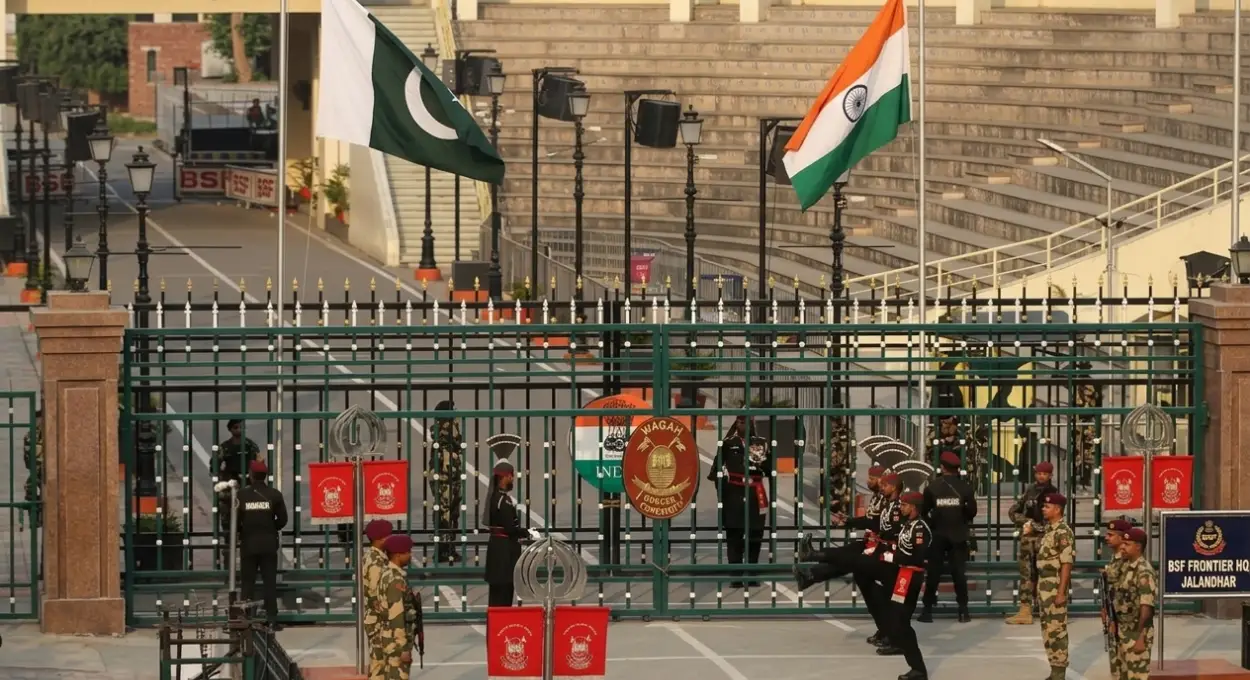
Something is stirring beneath the surface of one of the world's most dangerous rivalries. India and Pakistan — which fought a four-day war in May 2025 and have barely spoken officially since — are showing early signs of quietly testing the ground for resumed dialogue.
But between the backchannel meetings and the public threats of nuclear consequences, the gap between possibility and reality remains enormous.
An Unlikely Voice Breaks the Ice
The moment that started the conversation came from an unexpected source. Dattatreya Hosabale, general secretary of the Rashtriya Swayamsevak Sangh — the ideological parent organization of Prime Minister Narendra Modi's BJP — publicly said India should not close the door on dialogue with Pakistan.
"We should not close the doors. We should always be ready to engage in dialogue,"
Hosabale said in an interview with an Indian news agency.
The RSS is the same ideological movement that has shaped Modi's political career and the Hindu majoritarian philosophy that guides his government. For its general secretary to say this — at a time when Modi's government has repeatedly insisted that "terror and talks can't go together" — was striking enough to spark a political storm in India.
Pakistan's Foreign Ministry welcomed the remarks immediately, saying Islamabad would wait to see whether an official Indian response followed. More than a week later, Modi's government still hasn't formally responded.
Why These Signals Are Coming From the Margins
The RSS comment wasn't the only one. Former Indian army chief General Manoj Naravane publicly backed the same position, saying at a book launch in Mumbai that "the common man has nothing to do with politics" and that people-to-people friendship naturally improves state relations.
Irfan Nooruddin, a professor of Indian politics at Georgetown University, explained why these calls are coming from the RSS and retired generals rather than from the government itself.
"The Modi government has boxed itself into a corner with its anti-Pakistan rhetoric," he said. "For it to unilaterally stand down and initiate dialogue would be potentially politically costly. So, for the calls to come from the RSS and from ex-military leaders gives them political cover. Any efforts on their part can be spun as responding to calls from society rather than a political concession."
In other words — the government is letting others test the water before it decides whether to wade in.
The Secret Meetings Nobody Is Talking About
The public signals aren't the whole story. According to Jauhar Saleem, a former Pakistani diplomat, roughly four meetings between retired officials, former generals, intelligence figures, and parliamentarians from both sides have taken place over the past year — since the May 2025 war ended in a ceasefire that Trump publicly claimed credit for brokering.
The meetings — held in Muscat, Doha, Thailand, and London — used both Track 2 and Track 1.5 formats. Track 2 means civil society figures and retired officials meeting with governmental blessing but without official status. Track 1.5 includes some serving officials alongside retired figures — a step closer to formal diplomacy.
"I believe they have helped carry forward informal dialogue on a range of issues with a view to preventing major misunderstandings, and testing the ground, perhaps paving the way for formal contacts," Saleem said.
When Pakistan's Foreign Ministry was asked directly about these contacts, the spokesperson declined to confirm or deny them.
"If I was to comment, there would be no back channel," Andrabi said simply.
The Geopolitical Shift Driving the Calculus
The quiet engagement is happening against a dramatically changed strategic backdrop.
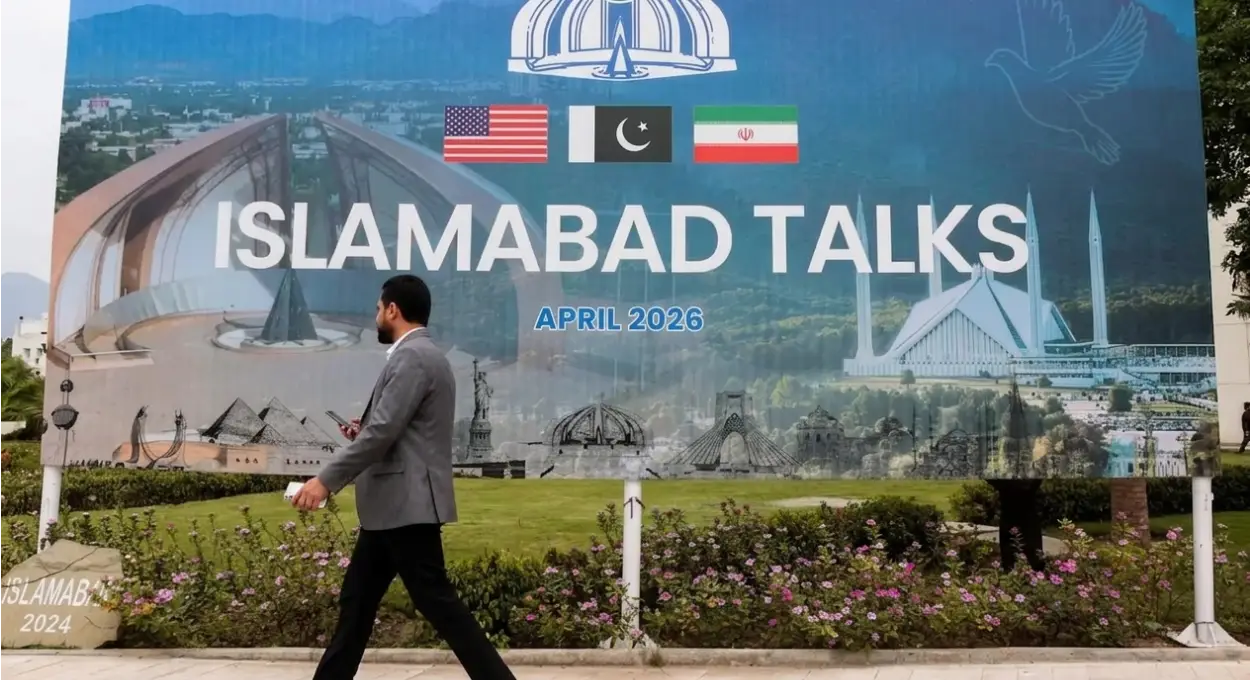
Pakistan's Field Marshal Asim Munir — who commanded Pakistani forces during the 2025 war — has since emerged as a key international broker, personally facilitating the April 2026 talks between Washington and Tehran that produced the first direct high-level US-Iran engagement since 1979.
Trump publicly credited both Munir and Prime Minister Shehbaz Sharif multiple times.
India, meanwhile, finds itself in a more complicated position with Washington — strained by trade tariff disputes and immigration restrictions. The space in which New Delhi could count on the US to defer to its regional preferences on Pakistan has narrowed considerably.
"The geopolitical situation has flipped on its head," Nooruddin said.
"India has gone from having pole position with respect to its leverage in Washington to being on the outside, while Pakistan has expertly managed to re-enter America's good graces. India could afford to ice out Pakistan when it appeared to be forging a special relationship with the US, but no longer."
But the Public Rhetoric Tells a Different Story
For all the quiet signals, the public language between the two countries remains combustible.
On May 16, Indian Army chief General Upendra Dwivedi said at a civil-military event in New Delhi that if Pakistan continued to "harbour terrorists and operate against India," it would have to decide whether it wanted to be "part of geography or history or not" — a thinly veiled reference to military annihilation.
Pakistan's military responded within 24 hours. The Inter-Services Public Relations directorate called the remarks "hubristic, jingoistic and myopic" and warned that threatening a nuclear-armed neighbor with erasure from the map "is not strategic signalling or brinkmanship; it is sheer bankruptcy of cognitive capacities."
Any attack on Pakistan, the statement added, could "trigger consequences that shall neither be geographically confined nor strategically or politically palatable for India."
That's the language of countries nowhere near reconciliation.
Water, Treaties, and Unresolved Grievances
A ruling from the Court of Arbitration at The Hague on May 15 — concerning water rights at Indian hydroelectric projects on the Indus river system — illustrated just how frozen the relationship is. Pakistan welcomed the ruling. India rejected it outright, calling the tribunal "illegally constituted" and its ruling "null and void."
The Indus Waters Treaty — a landmark agreement that survived three previous India-Pakistan wars and had governed water-sharing between the two countries for decades — remains suspended. India placed it in abeyance following the Pahalgam attack in April 2025 that triggered the May war. It has not been restored.
The Honest Assessment
Former Pakistani military official Tariq Rashid Khan offered the most grounded read of where things actually stand.
"Quiet signalling reflects realism more than sudden reconciliation," he said. "Track-1.5 and Track-2 dialogues are not a substitute for official diplomacy. Instead, they are a safety valve."
Saleem, the former diplomat who described the backchannel meetings, was similarly measured.
"A debate is taking place in the Indian strategic ecosystem about the level of engagement with Pakistan, where some see merit in moving towards formal dialogue. But the political will for the same is not yet clearly evident."
The meetings are happening. The signals are being sent. But between carefully worded RSS statements and nuclear-tinged military exchanges, the distance from quiet diplomacy to actual peace remains very long indeed.
Sign up for ContentNest
Join the ContentNest Community
Subscribe to receive our latest articles, trending stories, and weekly insights directly in your inbox.
By signing up, you agree to our Privacy Policy